
洛神
India Calls for Early Resolution of ‘Outstanding’ Border Issues with China_我的网站

一 | Beijing and New Delhi should resolve their “outstanding” border issues along the Line of Actual Control in eastern Ladakh at an early date, India’s Foreign Minister Subrahmanyam Jaishankar said on Thursday.,The Indian minister met with his Chinese counterpart Wang Yi on the sidelines of the G20 foreign ministers’ meeting in Bali, exchanging perspectives on the international situation and its impact on the G20 deliberations.,Wang also appreciated India’s support during China’s BRICS chairmanship this year and assured Beijing's support for India’s upcoming G20 and Shanghai Cooperation Organization presidency.,“India-China relationship is best served by observing the three mutuals – mutual respect, mutual sensitivity and mutual interests,” India's top diplomat reiterated.,The two countries have not made much headway in the last few rounds of dialogue on the border stand-off, agreeing only to continue discussions at senior military commander-level meetings.,The two militaries have pulled back their troops from the north and south banks of Pangong Lake and Gogra Post, while tension remains unabated in some sections of Hot Springs and the Depsang Plains.The deadlock continues, while both sides call for a peaceful resolution of the border issue.,During Wang's New Delhi visit in March, the Indian foreign minister pushed for a speedy disengagement at all friction points to set the stage for de-escalation along the LAC and normalizing bilateral ties.,The 16th senior commander-level meeting will likely be held later this month.,Want to know more? Check out our Koo & Telegram accounts!,Koo: https://www.kooapp.com/profile/sputniknews,Sputnik India: https://t.me/sputniknewsindia。
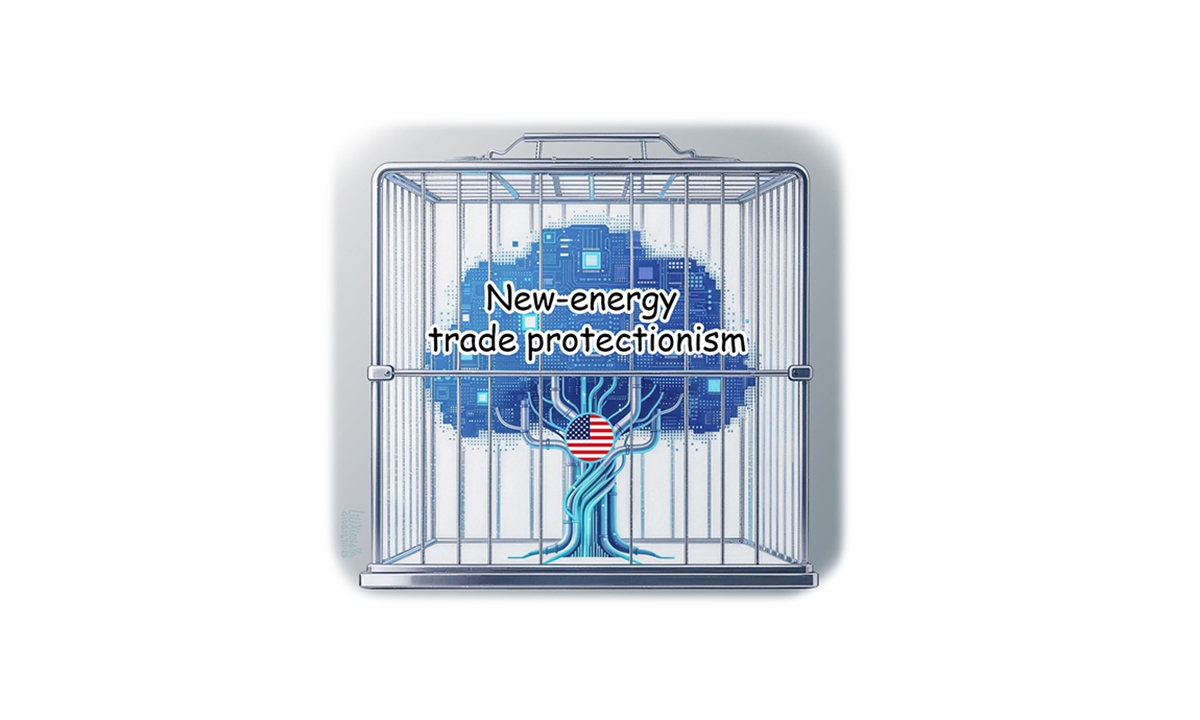
Recent media reports have questioned whether a natural gas plant built to power an Amazon data center project in Texas could become the largest climate polluter in the US. The controversy, whatever the eventual outcome, offers a reality check for America's artificial intelligence (AI) drive.
It exposes a growing contradiction: The US is racing to expand its AI capabilities, yet its protectionist trade policies are making it harder and more costly to access some of the clean-energy technologies needed to sustain that expansion. This raises a broader question: Can an energy-intensive AI race afford the costs of renewable energy protectionism?
The US is entering a new era of rising electricity demand. Data centers, the backbone of the AI economy, are emerging as one of the fastest-growing sources of power consumption. Much of that demand is still being met by fossil fuels: The International Energy Agency reports that natural gas supplies more than 40 percent of the electricity used by data centers in the US, making it their largest source of power.
So, it's not surprising that the expansion of data centers has raised concerns over their environmental impact and the pressure they could place on local power systems and electricity bills. A Gallup survey conducted in March found that seven in 10 Americans opposed the construction of AI data centers in their local area, including 48 percent who strongly opposed such projects.
The findings point to a broader challenge for the US: The race to develop AI is increasingly becoming a race to meet growing energy needs. Addressing this challenge will require more than advances in computing technology; it will also depend on an energy system capable of delivering large amounts of reliable, affordable and cleaner power. That, in turn, will require faster development and broader deployment of clean-energy technologies, from solar power to energy storage.
Yet in the clean-energy sector, the US has increasingly relied on protectionist trade measures that limit access to cost-competitive products from global markets. The country has placed greater emphasis on expanding domestic manufacturing capacity, but rebuilding entire clean-energy supply chains at home is a costly and time-consuming process. Even if expanded domestic production is achieved, it is likely to come at a higher cost, making the deployment of renewable technologies more expensive and potentially slower.
The solar industry offers a clear illustration of this policy direction. The US has continued to expand trade barriers in the sector. Reuters reported that the US government announced on Thursday a series of price floors and a 15 percent tariff on products made from polysilicon, a raw material used in solar panels.
The challenge lies in the limited scale of the US polysilicon industry. Reuters reported that the country has two polysilicon factories. Against this backdrop, relying on domestic polysilicon production while restricting access to imports runs counter to the goal of expanding solar power in the US. The country risks creating barriers that ultimately constrain its own access to the global supply chains needed for growth.
The pressing issue for the US is the speed at which new power demand is emerging. The expansion of data centers is creating electricity needs that cannot wait for domestic clean-energy capacity to develop gradually. Global supply chains can provide the scale and speed required in the near term. By narrowing access to these sources, the US risks turning clean-energy policy into a drag on the infrastructure needed for its AI race.
The US has placed AI high on its economic and technological agenda. The outcome of this race will matter greatly, as financial markets are also watching whether America can turn its AI efforts into commercial success.
This leaves the US with a difficult choice: Can it afford the cost of clean-energy protectionism while racing to build AI infrastructure? The answer may be no. Trade barriers that limit access to competitive renewable technologies could ultimately become a constraint on the AI expansion that Washington is seeking to accelerate.
The author is a reporter with the Global Times. [email protected]
。
Current article:http://pt5.zhouangnaoguangsundianzhenmou.cfd/7rph3/65wg8.html
Published on:06:19:55


1
邮件群发单显怎么用?为什么大批量发送还是得靠专业平台2
广州机动车停车计费单位时长从半小时调整为15分钟:单日最高收费限价200元3
2026年短途出行 哪些优质山水景区更适配全龄出游4
“王婆说媒”现场男子与女主播发生冲突 工作人员:会加强现场安保5
台积电 2nm 预计 2025 年量产,业界看好其领先三星和英特尔_iPhone15或使用台积电3nm芯片_技术论坛6
AI-generated films enter China’s mainstream awards through new AIGC unit7
WTA华盛顿赛王欣瑜"送蛋"仍告负 王曦雨淘汰温网四强8
财政部第二次续发行2026年记账式附息(十三期)国债9
8月LPR报价出炉:1年期为3.0%,5年期以上为3.5%10
辽宁省康复医院挂牌11
1198亿美元营收、资本支出再次上调,谷歌继续“为AI发电”12
国足国际排名仍暂列亚洲第11位13
今天,和当代“织女”们一起“乞个巧”14
网易考拉重新发行,将前往加拿大鹅指定机构进行认证。15
小米 Civi 2 现身:有望本月发布_Android_方面
- 随机推荐
1
China, Australia seize over 90 million cigarettes in joint probe2
花茶价格上涨30%,济南商户:“每个档次,都同步涨价”3
内塔尼亚胡:伊朗曾企图暗杀我的一个儿子4
真正的618从5月30日晚8点开启!京东618惊喜大使再送超千元补贴5
1.16福宝精粹:元通快递10元优惠券,优酷31天免去广告权6
지적장애인 성폭력 벌어진 ‘지옥’…노동부 인증 ‘표준사업장’이었다7
A mountain standing for millennia finds new ways to tell its story online8
热“雪”沸腾!150名大学生到这里共赴“青春派对”9
Japanese PM's address blurs Japan's responsibility for its acts of aggression: Chinese spokesperson10
《彩虹六号M Tactics》正式公布,系2008年《彩虹六号:拉斯维加斯2》以来首款《彩虹六号M》单人游戏。11
曝NS2多款3A新作实体只有下载码:一张纸 钥匙卡没了12
破题具身智能“数据荒” 北京中关村机器人“训练基地”揭秘,破题具身智能“数据荒” 北京中关村机器人“训练基地”揭秘13
内塔尼亚胡:美国和伊朗“不可能”达成外交协议,还和特朗普讨论了再次打击伊朗和加强对伊封锁14
国家卫健委:9月12日新增新冠肺炎本土“188+727”15
黄金交易策略:美国CPI数据来袭,仍需警惕空头反扑_日均线_金价